
The NIST Framework is a national set of safety steps used by organizations everywhere. It focuses on knowing what you have, protecting it, noticing when something seems wrong, and responding early.
At AQ’S Corner, we simplify this for seniors so it feels natural and easy to follow.
1. Know What You Use
Before you can protect anything, you must know what belongs to you.
List your devices and main accounts:
- Phone
- Tablet
- Laptop
- Banking or benefits accounts
This is your digital home inventory.
2. Protect What Matters
These simple actions act like locks on your digital doors:
- Strong passwords
- Screen locks
- Automatic updates
- Antivirus (if needed)
They take minutes but add major protection.
3. Notice When Something Looks Off
Your instincts have kept you safe for decades.
Trust them online, too.
Watch for:
- Unexpected pop-ups
- Strange emails
- Calls asking for information
- Login alerts you didn’t make
If something feels “off,” it usually is.
4. Respond Early
Quick action stops most problems.
If something worries you:
- Stop
- Don’t click
- Call a family member or Digital Buddy
- Change your password
- Turn off the device if needed
Early steps prevent long-term trouble. You already have strong instincts. The NIST Framework simply helps you use them online; calmly, confidently, and clearly.
See related articles:
Writer’s Note:
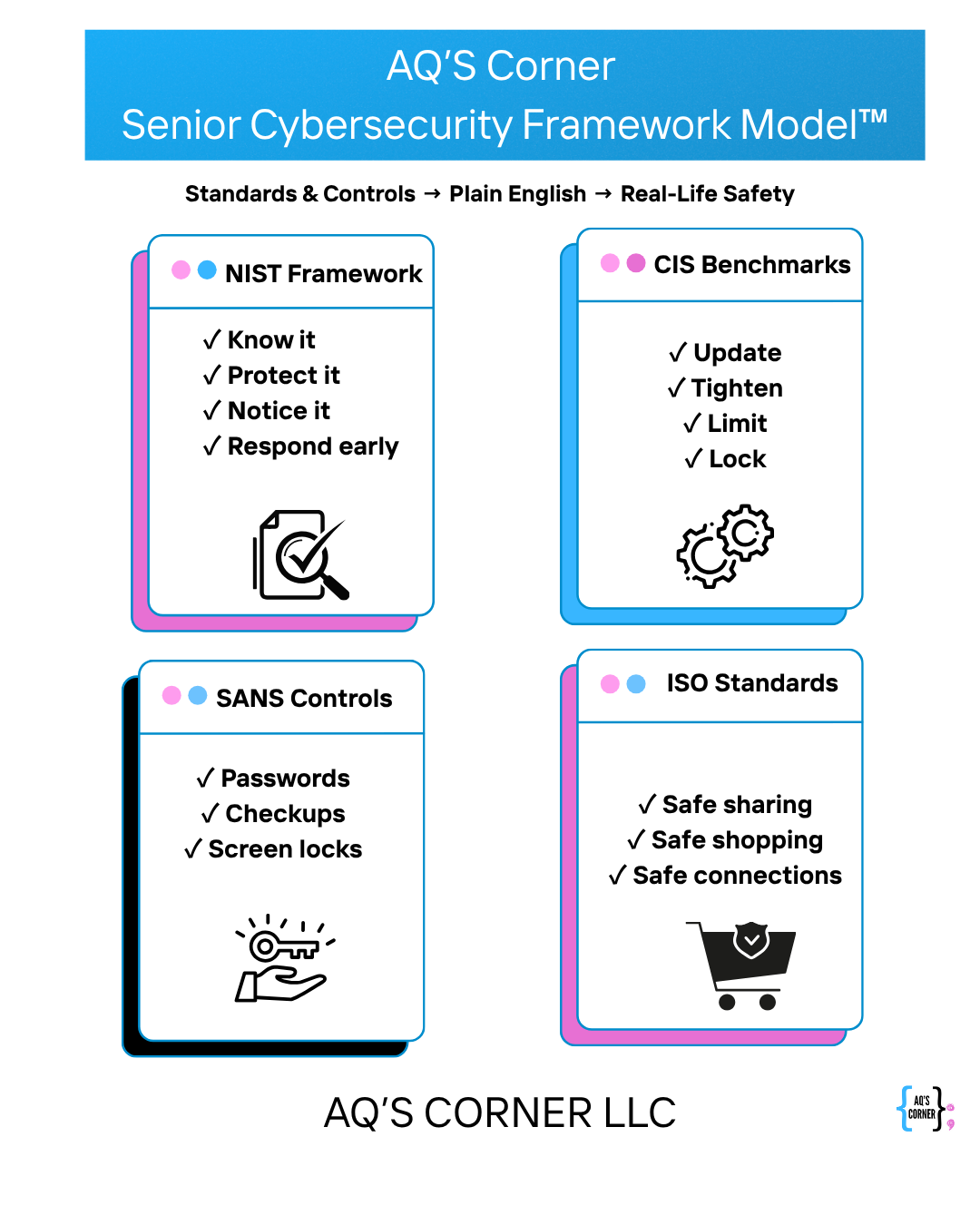
Below is the simplified senior-focused framework developed by AQ’S Corner to guide this entire series. This model blends national cybersecurity standards into clear, practical steps seniors can understand and use confidently. To explore the full framework, visit:
https://aqscorner.com/2025/11/20/aqs-corner-senior-cybersecurity-framework-model/







 AQ'S Corner
Leave a reply to The Everyday Habits That Help Seniors Stay Safe: A Senior Guide to SANS Controls – AQ'S Corner Cancel reply