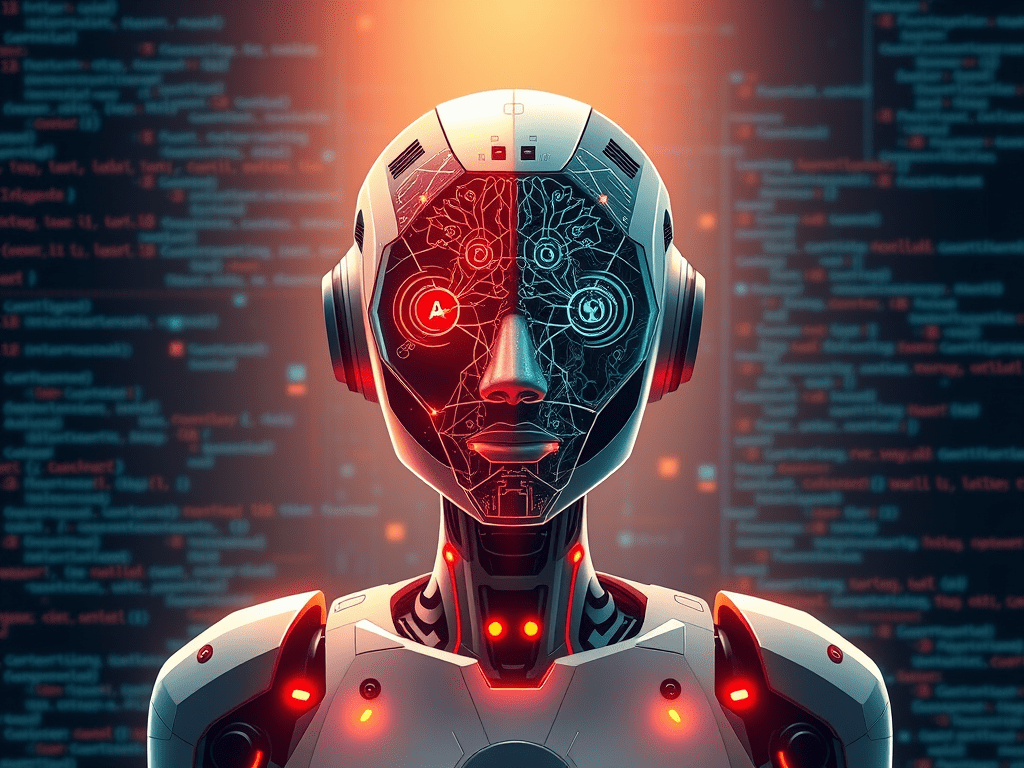
“AI feels overwhelming until you learn the language.
And it turns out, there are two.”
Artificial intelligence is everywhere right now, in classrooms, search engines, business tools, our homes, and even our kids’ homework routines. But there’s one thing the industry never slows down long enough to explain:
AI speaks two completely different languages.
Two vocabularies.
Two frameworks.
Two ways of understanding the same technology.
And most people only ever learn one of them.
So when a beginner hears someone casually drop a term like “Narrow AI,” while they’ve only been exposed to things like “Generative AI,” the conversation immediately feels mismatched, like everyone else got a secret onboarding packet you somehow didn’t receive.
You didn’t miss anything.
The tech world just never clarified the difference.
Let’s fix that.
Language #1: The Modern, Everyday AI Terms We Use Right Now
This is the language you hear on TikTok, read in product releases, watch in demos, and use in everyday apps. It describes what the AI actually does. It’s practical, simple, and directly connected to the tools we interact with.
Predictive AI — The AI That “Guesses”
Predictive AI looks at patterns and makes a prediction about what’s likely to happen next.
You already use it every day:
- Netflix recommendations
- Spam filters
- Weather predictions
- Smartphone keyboard suggestions
- It’s the quiet backbone of your digital life.
Generative AI — The AI That “Creates”
This is the AI most people know and see right now. It produces something new: stories, images, code, audio, videos, or ideas.
Examples:
- ChatGPT writing explanations
- Image tools drawing pictures
- Apps making music or voiceovers
- This is the AI powering creativity.
Agentic AI — The AI That “Does the Tasks”
This type of AI doesn’t just think, it acts. It takes steps, makes decisions, and completes tasks without needing you to guide every detail.
Think:
- AI assistants that schedule meetings
- Tools that organize your inbox
- Systems that manage workflows for you
This is the next wave, AI that doesn’t just answer, but acts. This first language is modern. Current. Everywhere. If you’re teaching kids, helping families, or building a business, this is the vocabulary that shows up the most.
Language #2: The Classic, Research-Focused Terms From AI Theory
Before AI became widely accessible, the field belonged mostly to researchers, academics, and theorists. Their language isn’t about what AI does; it’s about how intelligent AI is capable of being. This language is older, more philosophical, and rooted in long-term thinking rather than daily usage.
Narrow AI — Smart, But Only in One Lane
- This is AI that’s excellent at ONE task:
- Chess computers
- Facial recognition
- A spam filter
- A recommendation engine
Most of today’s AI still lives in this category.
General AI — Human-Level Intelligence
This type of AI does not exist yet. It represents the idea of AI that can learn anything a human can, across any subject, without retraining.
Superintelligent AI — Beyond Human Intelligence
Also not real. This is the sci-fi level, AI that would outperform the brightest human minds in every field. Researchers use these terms when discussing the future trajectory of artificial intelligence, not the tools we’re using right now.
So, Why Does Everyone Get Confused?
Because these two languages look like they belong together, but they’re describing AI from different angles. One describes capabilities. The other describes levels of intelligence. Without knowing that, you can hear both in the same conversation and instantly feel lost. You weren’t lost. The conversation was mixing two frameworks without telling you.
Which Set Should Beginners Learn? If you’re learning AI for real-world use, teaching, cybersecurity, business workflows, digital parenting, or creative projects, you should learn the modern set:
- Predictive
- Generative
- Agentic
These describe the tools you can touch today. But now you also know the classic set, so you’re ready for deeper discussions and future-forward conversations without feeling out of place.
Why This Matters Right Now
AI is evolving faster than any technology we’ve witnessed in decades. With every update, the vocabulary grows, shifts, and splits. But the ability to translate, to make AI feel simple, friendly, and understandable, will always matter.
When you understand both languages, you gain something powerful:
- Clarity
- Confidence
- Agility in conversations
- And the ability to teach others
This is how we bridge the massive gap between beginners and experts. And it turns out, it all begins with the words we choose and the clarity we offer each other. You don’t need a computer science degree to understand AI; you just need someone willing to slow the world down long enough to make it make sense.
AI isn’t confusing; the way people talk about it is. But once you understand these two languages, everything that felt tangled suddenly lines up. And now, you can walk into any room, a classroom, a tech panel, a small business workshop, or a LinkedIn thread, and follow the conversation with confidence, clarity, and calm. You’re not just learning AI. You’re learning how to lead through it. And that’s not just knowledge, that’s power.





 AQ'S Corner
Leave a comment