
Sometimes the scariest cyber stories don’t begin with a mysterious hacker in a dark hoodie. Sometimes they start with someone already inside the castle walls… someone trusted… someone who forgets that responsibility is a powerful thing.
And that’s exactly what happened recently at CrowdStrike, and understanding who they are makes this story even more important.
Who Is CrowdStrike, and Why Does This Matter?
CrowdStrike is one of the biggest cybersecurity companies in the entire world.
Their job is to protect hospitals, schools, businesses, and even parts of the government from cyberattacks. Think of CrowdStrike as a giant team of digital superheroes, standing guard so the rest of us can use our computers safely. So when they face a threat from the inside, it’s a big deal, and a powerful lesson for families and kids learning how to stay safe online.
What Actually Happened (Explained Like We’re All Sitting on the Classroom Carpet)
In November 2025, CrowdStrike discovered that the danger didn’t break in from the outside.
It grew from the inside.
One of their own employees took screenshots of internal systems, the same way a kid might take a picture of a homework answer and send it to the wrong group chat, and passed them to a hacker group called Scattered Lapsus$ Hunters.
The hackers posted those screenshots online like trophies, trying to show off.
CrowdStrike moved fast:
They caught it, shut it down, and protected their customers.
But the moment still mattered, because it teaches a lesson that every kid, parent, and classroom needs to hear.
Why This Story Matters for Kids and Families

Every time I teach a CyberHero session, I remind kids:
“Not every threat kicks down the door.
Some already have a key.”
This incident makes that lesson come alive.
1. The inside job is real.
Someone trusted can still make a harmful choice.
2. One small action can open a big door.
One screenshot.
One share.
One “…I didn’t think it mattered.”
And the whole team is exposed.
3. Heroes protect their own team first.
It’s not just about keeping the “bad guys” out,
it’s about acting responsibly inside your own digital world.
4. Kids relate to this perfectly.
It’s the friend who screenshots the group chat.
The classmate who shares the homework folder.
The cousin who grabs your device and clicks everything without asking.
The same rules apply:
Trust is powerful.
And with power comes responsibility.
What I Teach During Presentations
During our CyberHero workshops, we tell kids:
“Your digital world is like a clubhouse.
There are people outside trying to get in; those are the external threats.
But sometimes the danger comes from someone already inside the clubhouse, that’s an insider threat.”“Everyone inside must protect it together.
Because one wrong move, on purpose or by accident, can put the whole team at risk.”
And this is the moment where my daughter steps in, because kids hear it differently when it comes from someone their age.
She explains it like this:
“There are two types of insider threats:
1️⃣ Malicious – when someone does something wrong on purpose.
2️⃣ Accidental – when someone makes a mistake that still causes big problems.”
“So even if you’re inside the clubhouse, you still have to be careful.
You don’t screenshot private things, you don’t share passwords, and you tell someone if something feels weird.
That’s how we protect each other.”
A Takeaway for Parents and Guardians
This story is a reminder that families need digital rules just like companies do, because kids face both kinds of dangers:
- the outside threats trying to break in,
- and the inside mistakes that can happen right at home, sometimes on purpose… sometimes by accident.
Kids need to understand:
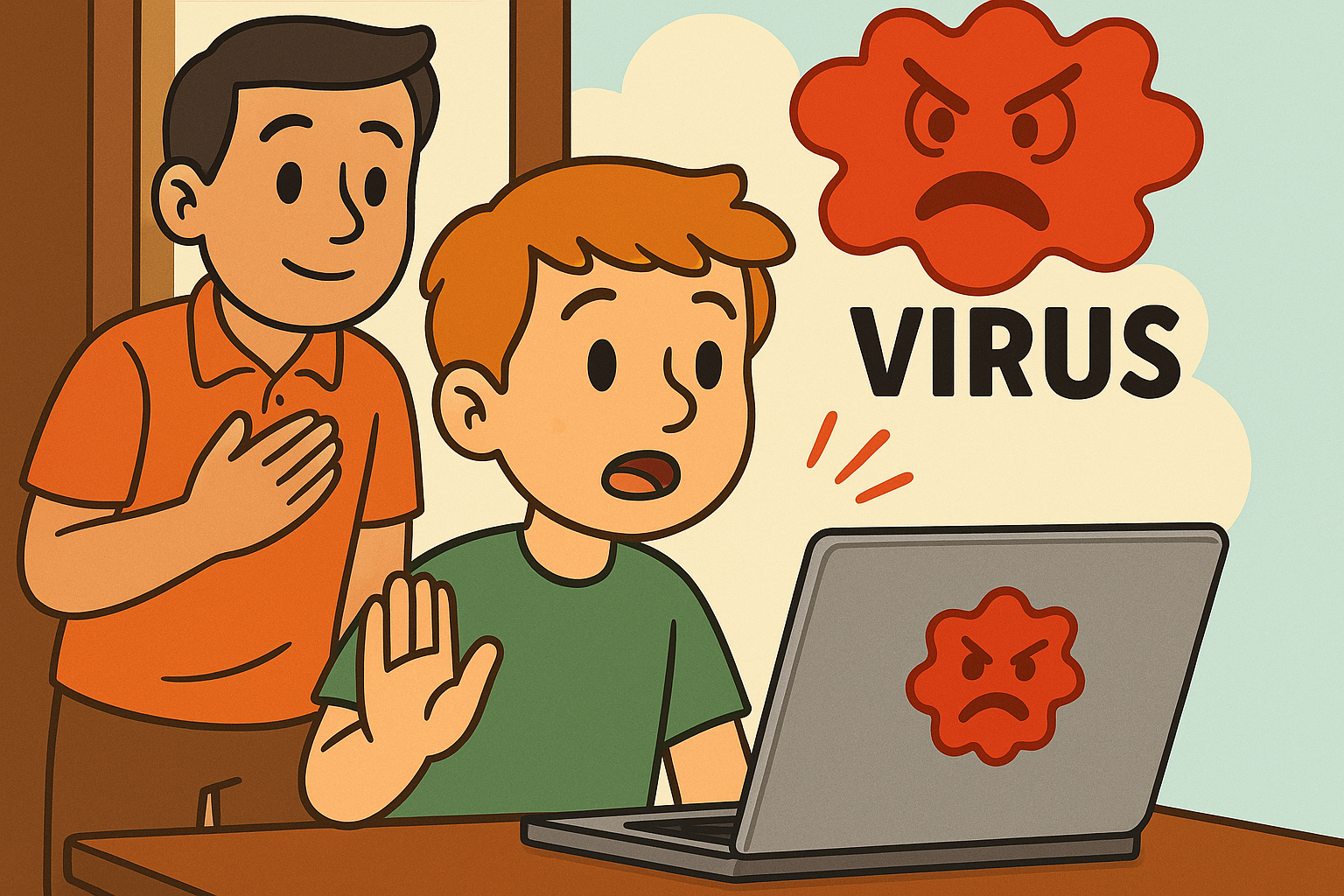
- what’s private and must stay inside the “family clubhouse,”
- what’s off-limits, even if they’re curious,
- what should never be shared, not even with friends,
- when to ask for help before clicking, posting, or screenshotting,
- and why it matters: because insiders can cause harm without ever meaning to.
When families talk openly about both types of risks, the external threats outside the walls and the insider slip-ups that happen inside, kids become steadier, wiser, and far more confident online.
That’s how we raise a generation who protects their digital clubhouse with courage, clarity, and care.






 AQ'S Corner
Leave a comment